Winter, item by item
What people sleeping outside actually need in winter
People sleeping outside in winter need to stay dry and keep their hands, feet and head covered, so a sleeping bag, dry socks, a hat, gloves and a scarf come first1. After warmth come the things that are hard to keep up without a home: soap and a toothbrush, water, a bandage, something to eat.
A Project Winter Survival kit covers both lists. Each one holds 30+ new items in a backpack, and a $50 donation helps build one2.
Warmth
The cold starts with hands and feet.
Frostbite usually starts furthest from the heart, in the hands, feet, nose and ears1. The City of Toronto tells health professionals that for people outside for long stretches without enough protective clothing, the risk of hypothermia or frostbite starts at a wind chill of minus 10, and at minus 28 exposed skin can freeze within minutes3. These come first.
In the kit
- Sleeping bag
- Winter hat
- Winter scarf
- Winter gloves
- Socks
- Hand warmers
About the socks
Socks get wet. You lose heat faster when you are wet, and Health Canada's advice is to change into dry clothing as soon as you can1. Feet that stay wet and cold can also develop trench foot, which the Canadian Centre for Occupational Health and Safety says can happen at temperatures as high as 15.5°C4. Without a home, the only dry pair is the one you carry.
The bag
Everything in a kit has to travel.
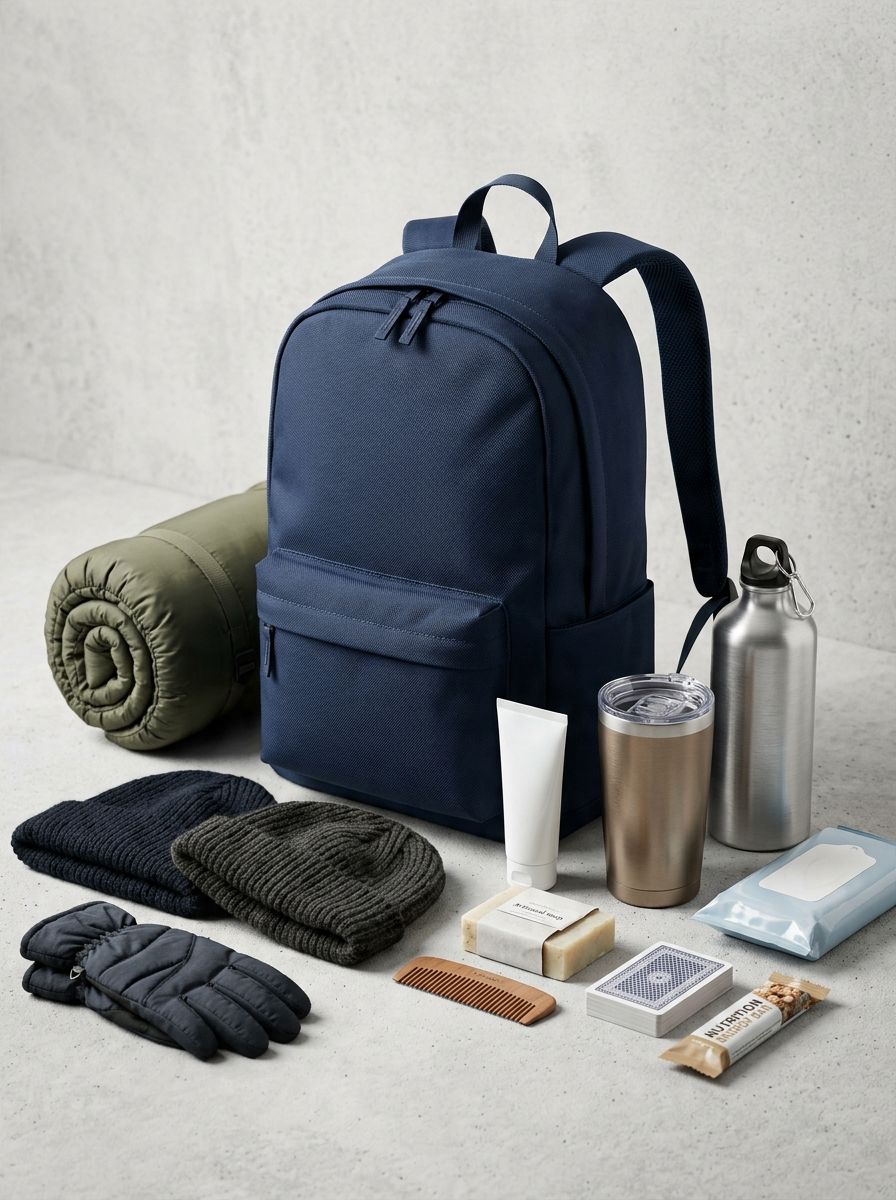
Without a home, whatever you own goes wherever you go, from first thing in the morning to wherever you end up sleeping that night. So the bag is part of the kit. Each one comes in a sport bag or knapsack2.
Hygiene
The longest list in the kit.
In the kit
- Face cloth
- Towel
- Soap
- Body wash
- Shampoo
- Conditioner
- Deodorant
- Toothpaste
- Toothbrush
- Shave cream
- Razor
- Hair brush & comb
- Body & hand lotion
- Lip balm
- Hand sanitizer
- Hand wipes
- Facial cleansing cloths
- Kleenex (facial tissue)
Every item is new2. That is for hygiene, and for dignity. A toothbrush and a razor will never look as urgent as a sleeping bag, but they are what let someone walk into a clinic appointment or a visit with family feeling like themselves.
The small things
First aid, water and something to eat.
In the kit
- Polysporin
- Bandaids
- Bottled water
- Reusable water bottle
- Insulated cup
- Food snack
The cup is for something hot. Health Canada's first-aid steps for someone with hypothermia include warm, sweet drinks1, and an insulated cup keeps a hot drink hot for longer on a cold walk.
The rest
Something for the hours in between.
In the kit
- Pen
- Notepad
- Playing cards
- Activity book (crossword / sudoku)
- Stress balls
The notepad is for phone numbers. The playing cards and the crossword book are for the hours between appointments and meals, which a kit built only around the cold would leave out.
Giving directly
If you are handing something over yourself.
Ask first. Everything above is our list, built for 3,500 people at once2, and the person in front of you knows their own needs better than any list. Someone who already has a sleeping bag might need dry socks more, and anything you give is one more thing they carry all day.
What a kit is for
A kit is for the nights outside.
A kit gets one person through winter nights with a sleeping bag instead of without one. Housing is a bigger job. If someone you know needs a bed tonight, Toronto's Central Intake line is 416-338-4766, open 24 hours a day5, and our shelter page lists warming centres and the other numbers worth having.
Where kits go
From one Saturday in January to 200+ agencies.
Company teams pack the kits in a single day each January, 3,500 of them2. They are sorted by agency request and loaded out to more than 200 front-line agencies across the GTA, including shelters and outreach programs, who hand them to the people they already work with2. Those agencies ask for up to 30,000 kits a year. Since 1999, nearly 95,000 have gone out2.
The next pack is January 16, 2027.
Give toward a kit
$50 helps build a kit.
Each kit holds 30+ new items, including the sleeping bag and the backpack, and because we buy at wholesale, every dollar goes further than it would at a store2. CanadaHelps issues your tax receipt automatically.
Questions people ask
The short answers.
What do homeless people need most in winter?
Warmth and dry clothes. Health Canada lists homeless people among those at greater risk of frostbite and hypothermia, and notes that you lose heat faster when you are wet1. A sleeping bag, dry socks, a hat, gloves and a scarf come first.
What are the best things to donate to homeless people?
New items that keep someone warm and can be carried, matched to the season. In winter that means socks, hats, gloves, scarves and sleeping bags. If you are giving through Engage and Change, money goes further than goods: we buy at wholesale, and $50 helps build a full kit2.
Can I donate used clothes or drop off items?
Not as an individual. Every kit item is new, and we do not take used clothing or individual drop-offs. Companies, schools and faith groups that run a drive for new items and deliver them in bulk are welcome as in-kind donors: companies can start on our For Companies page, and schools and faith groups through our Get Involved form.
Where do Project Winter Survival kits go?
To more than 200 front-line agencies across the GTA, including shelters, Out of the Cold programs and outreach programs2. Agencies apply by December 1 each year and hand the kits to the people they work with.
Can I volunteer to pack kits?
The January pack is for company teams. A company donates to bring a team, and the team packs kits on the day. On your own, the way in is giving toward a kit or starting a fundraiser on CanadaHelps.
How many kits does Engage and Change give out?
3,500 in a single day each January, for more than 200 front-line agencies across the GTA. Agencies ask for up to 30,000 kits a year, and nearly 95,000 have gone out since 19992.
Sources
- Health Canada, Extreme cold. Page details dated October 19, 2021. canada.ca Extreme cold.
- Engage and Change. Project Winter Survival kit list and program figures, engageandchange.org (project-winter-survival, donate, companies, apply), as of October 2026; totals (nearly 95,000 kits since 1999, up to 30,000 agency requests a year) as confirmed by the board, October 11, 2026. Project Winter Survival.
- City of Toronto, Cold Weather Information for Health Professionals. toronto.ca Cold Weather Information for Health Professionals.
- Canadian Centre for Occupational Health and Safety, Cold Environments: Health Effects and First Aid. ccohs.ca Cold Environments.
- City of Toronto, Central Intake. toronto.ca Central Intake.
Sources checked October 11, 2026.